

A short story by Jeevak
“I’ve spent my entire life babysitting a grown man with talent for poetry and the emotional depth of a teaspoon.” Devika sighed, her voiced laced with bitter wit. “Sure, he can string words into magic on the paper, but when it comes to being a good brother, husband or father—he’s always on a short-circuit. How can someone be so stone-hearted to ignore and reject his new born son for months? She paused, her wrinkles getting more pronounced and eyes glistening. “Perhaps I enabled him, fed his ego. Look at him—still expecting applauses and batting away responsibilities.” I held her soft, warm, time-worn hands and could feel her deep resentment through her watery eyes and parched lips. It’s a strange ache, to watch your mother carry decades of disappointment, wearing it each day. Especially now, in the twilight of her long luminous struggle.
“Daadi, did you finish your tea?” This was the cheerful voice of Anjali, coming from the doorway.
She was one of those age care workers, who had not traded her soul for the clock-in card. She radiated a
genuine warmth that put a question mark on ‘tired disinterested age care worker’ stereotype. Devika stopped sobbing and handed over the empty tea cup to her with a nod, without saying a word. “Thank you, Anjali. Mum really enjoys your tea.” I offered, translating her quiet gratitude into something a little more human- readable.
I turned to her, as the worker left the room. “How old were you, mum, when you were in that refugee camp?” I was trying my time-tested distraction strategy for pulling her out of the quicksand of despair.
Sometimes, when resentment builds a fortress around the heart, first act of mercy is distraction. I wanted her to find an escape to forgiveness, or gratitude or even humour.
“Oh, I was about eleven,” her voice softening with memory. “And I can never forget those eight
months in the refugee camp. It was sometime in1947, during the partition of India.” Her watery eyes suddenly lit up, sparkling like a child offered a lollipop mid-tantrum—an emotional U-turn.
“Life in the refugee camp was far from ideal,” she continued. “But I was happy. We had so little, yet it felt like enough. There were cousins, friends, relatives—all huddled together in the same storm. No one had much, but no one was alone. I did not miss school one bit. Mostly, I just played all day, blissfully unaware of the weight grown-ups were carrying, mulling over the future after loss of life and property in the riots.”
“Mum, tell me again about your Daadaji (grandfather). I mean— he lost everything during Partition,
didn’t he? Must’ve been simmering with resentment, especially at that mature age.”
“Nah, not him. I never saw him ever get upset,” she contested my assumption. He was a saint, really.
The whole community in our town admired him—Hindus, Muslims, Sikhs, all of them. They called him Bhagatji—the devoted one. He didn’t want to leave his ancestral home, not even when things got ugly. The only reason he left, at the very last minute—was because the Muslim family sheltering him begged him to go. They were risking their lives to protect him from the religious hooligans. So, he went, for their sake.” She took a pause, her fingers absentmindedly folding a facial tissue into what resembled a tiny origami boat. “You know, there were some good Muslims too.” She said it with pretentiousness of a benign but prejudiced eighty- year-old.
She had regained her full sparkle by now. I’d heard this story a hundred times from her and her siblings, but I brought it up again now, when she was struggling to stay connected with her own life. Her heavily wrinkled, almost round, baby-face and light brown eyes always lit up at the mention of her happiest memories. She had weathered storms in her married life—decades of quite sorrow at the hands of a self- absorbed poet, a man likely nursing invisible wounds of his own— orphaned too young and never quite stitched back together. It had been an arranged match: a forward—thinking women paired with a conservative man clinging tightly to tradition and his anxieties. But this was a time, when marriages, even unhappy ones, had a way of enduring— thanks to the lack of options and a kind of stubborn stitched-in resilience. We witnessed multilayered generational trauma and suffering, inflicted and endured by otherwise good people on each other. I liked to think I was at the tail end of it— I hoped I was.
She was now buzzing— full of joys of spring.
“The camp manager recognized it too,” she said, eyes bright. “He knew Bhagatji wasn’t just another
displaced elder— he man a man of faith, a Sanskrit scholar revered by many. Even in that sea of sorrow,
people were drawn to him. They’d gather around him each evening, to listen to his gentle words of wisdom.” She smiled, warmed by that memory trip. “The camp manager gave him a separate tent, you know— so he could continue his meditation and soothing discourses for the grieving camp residents. His tent became a popular place to be. He had such a calm voice and a happy face, that made you feel welcome.”
“Did he have a cute round face like you?” I asked, half-teasing, half-lost in the story that I had instigated. Perhaps, deep down, I needed to hear it again.
She broke into a wide, almost mischievous smile.
“No, no—he had a long sharp nose and bluish eyes. May be a dash of Alexander the great in the gene pool!”. She chuckled, clearly amused by her own mythology. “I took more after my maternal side.” She added, it with a hint of disappointment in her tone.
“Does anyone in the family have his photograph?” I was in now—fully. The storyteller had pulled me into her web, and the trapper was now the trapped. I genuinely wanted to know more about Pandit Gangadhar Bhagatji— the mystic legend hidden in my family tree. She tilted her head slightly while leveling that facial tissue origami with her fingers and replied, “Chaachaji—my uncle—was a captain in the army back then.
Very meticulous man. He had his photograph in the house. But that was years ago. I wonder if anyone from his family held on to those old photographs…”
“Okay, I can try to track someone from your uncle’s family. They lived in Dehradun for years, didn’t they?” I offered.
“Yes, that will be nice.” She replied with a lingering simper and propped herself up, to a bit more upright position.
“He really wanted your Daadaji— his dad— to go on a pilgrimage to Haridwar, didn’t he?” I asked. “Yes, but Daadaji was not interested in going anywhere—not from that camp, anymore. He’d left
everything back in Pindi—home, belongings, even the hunger for more. Worldly attachments and desires, he used to say, were like dust on the soul.” She paused for breath, her fingers still dancing slowly with the tissue paper. “My uncle kept insisting though, thought the pilgrimage would do him good. He even went ahead and booked him a train ticket to Haridwar.
“Oh, I can’t quite remember— did he actually go on the pilgrimage?” I asked, trying to recall the events.
“He only smiled, when Chaachaji kept insisting. He even went ahead and booked a train ticket to Haridwar. Then one day he said to him, “Fine Mohan, I will go… maybe I’m meant to after all”.
She took another long pause and cleared her throat. I handed her a glass of lukewarm water, the
universal cure for memories. “His train was scheduled to depart at noon that Saturday. After his Friday evening discourse, everyone in the camp offered him good wishes for the trip. But he only smiled and said nothing. I never once saw him tired, upset or angry. Unlike your father, who could probably pick a fight with a cloud. Honestly, is that any way to live?” She sighed, drifting back into the pile of her gloom.”
“So, your Daadaji never lost his temper? Not even once?” I asked, raising an eyebrow.
“No, not at all.” She said with a soft smile. “He was always calm, always at peace with himself. He was never resentful, never held a grudge. I cannot remember him ever not smiling. Years of meditation gave him that glow.” Her eyes sparkled; her enthusiasm bubbled back.
“So, what happened? Did he board the afternoon train?” I asked, wanted to steer her back into the
captivating current of her childhood—those days spent in a refugee camp, raw and real.
Her eyes wide opened, as if still astonished by the events that happened many decades ago. Sparkle in her eyes and smile on her face with deepening different set of wrinkles returned. “So, he asked my father to prepare the tent for the sermon and send invitation to all those present in the camp that morning. The stage
was set and decorated with fresh flowers picked from nearby farms. I helped in decorations and immensely
enjoyed doing it along with my cousins and friends.”
“How many people must have attended that discourse?” I asked.
“Perhaps seventy, maybe eighty people, I guess. parsaad of sweet meal for offering, was prepared by our family and friends, just like we always did for his discourses. Camp manager also helped with the
ingredients. Incense was lit, and the tent slowly filled with that warm, scared fragrance.” She paused, longer this time. Her eyes drifted, as if pulling the scene from the folds of memory.
“Daadaji sat on the altar, dressed in a crisp white Dhoti and kurta, without his usual headgear. He began with mantras and hymns and then he spoke about pilgrimage… and departure. And then, slowly, he slipped into a deep meditation. His smile didn’t leave his face, not even then.
I didn’t understand much of what he was saying—I was still a child. Eventually I got distracted, chatting quietly with my friends. Then, suddenly, the congregation began chanting loudly. I looked toward the stage and saw someone easing Daadaji into a lying position. I didn’t quite know what was happening.”
“What happened then?” This was the part I wanted to hear again—the most gripping turn in the tale.
“He has passed over,” I heard someone say. Some of our close relatives and a few of the devotees
began to sob. It was exact 12 noon— precise time for his departure.”
We both fell silent. The air seemed heavier now.
“Did you cry, mum?” I asked gently.
“No,” she said in a calm voice. “Daadaji used to say passing over should be a time to rejoice. A return. I missed him, yes…I was sad, but I didn’t cry. He always said that for someone free of resentments, death is just a breeze.”
“That’s… really cool.” I said, half to myself. The I added, with a bit of tease and also, sincerity, “so why didn’t you learn that technique from him. You do carry some bitterness, don’t you?”
“Yes,” she admitted, a wry smile tugging her lips. “But that’s because of your dad. I wasn’t like this.” “Can you let it go—just like your Daadaji? I think you can. Somewhere deep down, you’re still strong
enough to forgive.”
She looked at me, eyes filled, and nodded. A tear rolling down her cheek. I leaned in, wiped it gently and kissed her forehead.
“Dad is a poet,” I said softly. “But he was an orphan. He lived a harsh life. He didn’t mean to hurt anyone— he just didn’t know another way. You endured it with such grace. Maybe now is the time to think of your Daadaji… and choose forgiveness. I’ll do the same—all those who hurt me, knowingly or not. It is just the absurdity of our universe. Life’s too short, too strange. Let’s forgive and move on”. It was a monologue meant for her, but really, it echoed within me too.
I got up to leave. “I must go— early start tomorrow. You should get some rest too.” I helped her into bed. She seemed thoughtful, unusually quiet. But peaceful, somehow. I walked slowly to my car, heart heavy with love and memory, thinking about her eventual departure—and mine. And silently hoping…that when my time comes, I’ll carry no resentment either. Only breath, and perhaps a smile.
Jeevak (AKA RaJeev Jyoti) is a KanYini volunteer author of this short story. DrJeev93@gmail.com
Author
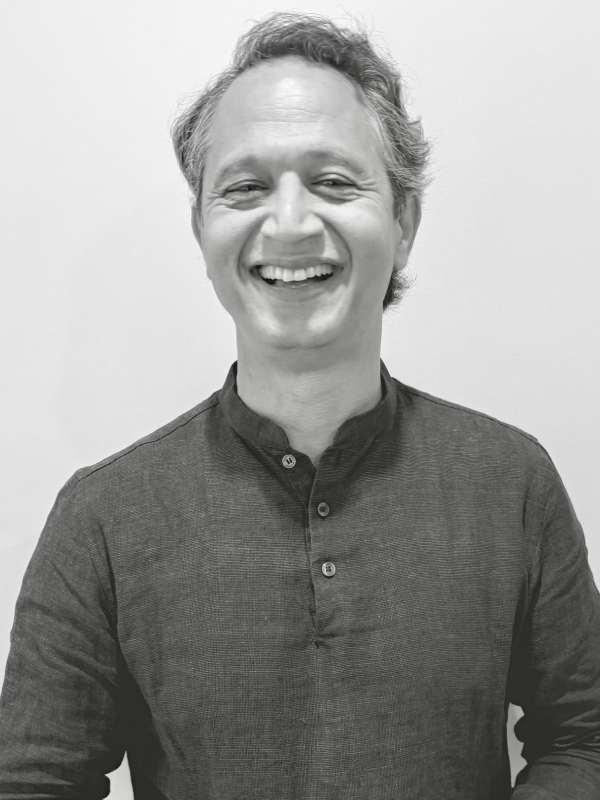

The Radiologist who Writes, Rights, and Unites.